Digital Printing Services Uncovered: Design, Print & Finishing Possibilities
Digital printing offerings include a variety of options designed to meet various business needs. These offerings encompass design, production, and finishing capabilities, enabling premium results customized for targeted audiences. As technology continues to evolve, businesses can achieve vibrant visuals and unique presentations. The decision regarding printing solutions and finishing options can significantly influence the end result. Understanding these elements can help businesses make informed decisions. What factors should be considered when selecting a service provider?
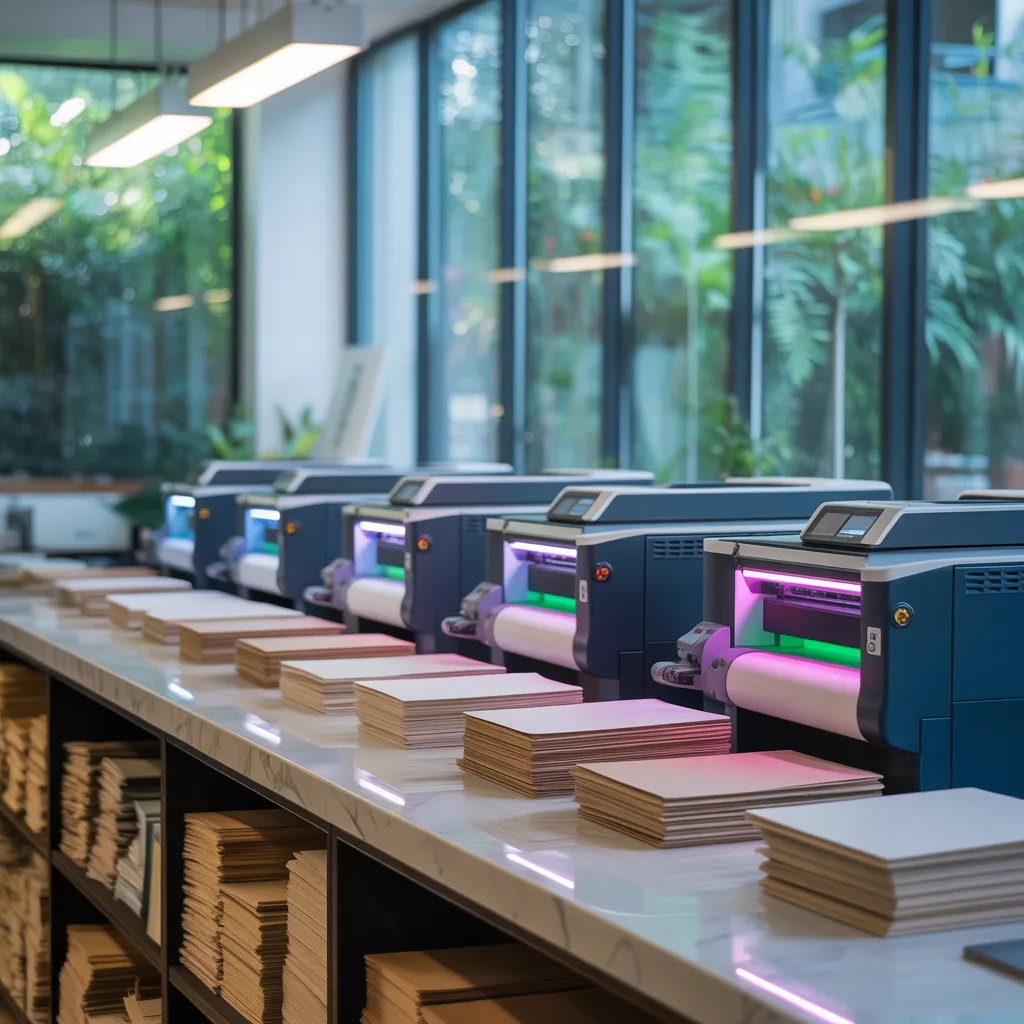
What Is Digital Printing and How Does It Work?
Digital printing embodies a groundbreaking way of creating high-quality visuals straight from digital files. Unlike traditional printing methods, that depend on physical plates, digital printing leverages digital technology to reproduce images across multiple substrates. This workflow commences with a digital file, which is sent directly to the printer, eliminating the need for time-consuming setup and adjustments.
The main methods used in modern digital printing include laser and inkjet printing. Inkjet printing works by spraying microscopic ink droplets onto the surface, while laser devices apply toner and heat to transfer images onto the material. Both methods produce sharp, vibrant results, making them perfect for a broad variety of uses, from promotional content to fabric printing.
Digital printing is notable for its ability to handle short runs and customizations efficiently, enabling fast turnaround times. Because of this, it has established itself as a key solution for businesses pursuing adaptability and quality in their printing demands.
Major Benefits of Digital Printing for Your Business
Businesses increasingly recognize the key benefits of embracing digital printing solutions. One significant benefit is cost-effectiveness, particularly for small to medium-sized print runs. In contrast to conventional methods that typically demand significant setup, digital printing reduces material waste and allows for affordable production of custom prints.
Furthermore, digital printing offers swift turnaround times, helping businesses meet tight deadlines without sacrificing quality. The flexibility to readily alter designs without facing high costs is another advantage, allowing for flexibility in marketing materials and promotional items.
Furthermore, digital printing is compatible with a diverse variety of materials and finishes, offering businesses increased creative possibilities. The solution also promotes personalization, allowing for tailored messages that connect with specific audiences. Overall, these features make digital printing a desirable choice for businesses looking for adaptability, quality, and efficiency in their printing requirements.
Uncovering Design Options for Your Digital Prints
In what ways can thoughtful design maximize the potential of digital prints? Well-considered design choices play a critical role in boosting the visual appeal and functionality of digital prints. Leveraging high-resolution images and dynamic typography can establish a memorable first impression. Color schemes must be thoughtfully chosen to elicit the intended emotional response while maintaining compatibility with the printing process.
Additionally, including white space can boost impact and readability, drawing the audience's eye to key aspects. Distinctive forms and distinctive layouts can also improve a design, helping it stand out in a busy market. Furthermore, factoring in the end-use of the print—whether for personal projects, marketing materials, or packaging—can shape creative choices to fully satisfy particular objectives. In the end, a well-thought-out layout not only grabs attention but also expresses the core message powerfully, amplifying the complete impact of digital print projects.
Digital Printing Methods: Inkjet vs. Laser
Choosing the correct printing method can greatly influence the final outcome of a project. Laser and inkjet printing represent the two principal digital printing methods, each with distinct characteristics. Inkjet printers employ liquid ink, allowing for rich colors and detailed definition, making them perfect for premium images and graphics. They are outstanding at producing prints on numerous media options, including photo paper and canvas, but can be less fast than laser printers.
In contrast, laser printers employ toner and heat to affix the print onto paper, which results in faster output speeds and sharper text, making them suitable for documents and high-volume printing. While laser prints may not match the color depth of inkjet prints, they provide durability and smudge resistance. In the end, the decision between inkjet and laser printing depends on the particular needs of the project, including quality, speed, and the nature of materials used.
Impressive Post-Processing Techniques to Give Your Prints Extra Impact
Taking prints to a new level of visual appeal often involves utilizing creative finishing techniques. One well-known method is spot UV coating, which delivers a lustrous finish to particular areas, producing contrast against dull surfaces. This approach draws attention to key elements, improving overall visual appeal. Another impactful option is embossing, providing a physical dimension by raising certain text or designs, causing them to attract attention.
Foil stamping is also remarkable, incorporating metallic or pigmented foil onto prints for a premium aesthetic. This method works especially well for logos and invitations. Furthermore, die-cutting enables distinctive shapes that attract attention and set products apart.
In addition, lamination provides protection while boosting color vibrancy, keeping prints long-lasting and resilient. All of these finishing methods have the ability to turn standard prints into visually striking materials, rendering them more attractive to prospective customers. The strategic implementation of these approaches can considerably amplify the impact of digital prints.
How to Choose the Right Digital Printing Service?
Selecting the right digital printing provider demands thorough evaluation of specific project needs. Reviewing the abilities of multiple vendors guarantees that they can meet those needs successfully. Furthermore, comparing cost structures can make it easier to discover the best value while maintaining excellence.
Analyzing Your Project Needs
How should one select the ideal print service for their unique project demands? Initially, it is important to identify the project's parameters, including the materials needed, the preferred finish, and the project's audience. Knowing the timeframe is also essential, as different providers may deliver results faster. Next, financial limitations should be evaluated, as expenses can fluctuate widely based on project size and intricacy. Additionally, it is prudent to evaluate the printing technology used, as this can impact quality and color fidelity. Finally, reviewing client feedback and testimonials can offer valuable information about dependability and quality, guaranteeing the selected provider meets the project's goals and standards.
Evaluating Service Capabilities
What elements should one examine when evaluating the capabilities of a digital printing service? To begin, the range of printing options available is paramount; services should supply multiple formats, materials, and surface options to satisfy varying project demands. Additionally, the caliber of the printing machinery should be examined, as modern, high-quality printers can greatly affect the final output. Additionally, delivery schedules and adaptability in fulfilling timelines are crucial for prompt project delivery. The provider's knowledge and proficiency in particular sectors can also influence its ability to deliver desired results. Lastly, reviewing customer feedback and case studies offers perspective on dependability and client contentment, ensuring that the preferred company matches the particular needs of the undertaking.
Evaluating Pricing Options
When evaluating digital printing services, pricing options serve a critical function in the decision-making process. Organizations need to evaluate various factors, including foundational costs, volume discounts, and additional charges for specialized services. One should always obtain estimates from several vendors, as pricing structures can vary notably. Certain providers include comprehensive bundles, while some may impose undisclosed charges for design adjustments or rush delivery. Buyers ought to examine the grade of materials and finishing techniques, as these factors affect final pricing. Ultimately, grasping the full financial commitment, including possible revisions or reprints, assists in choosing the best value-oriented and trustworthy print service provider tailored to specific needs and budgets.
Preparing Your Files for Optimal Print Quality
When getting files ready files for print production, picking the right file format is vital for guaranteeing compatibility and quality. Moreover, considering resolution and color mode can greatly influence the final output. Grasping these aspects is necessary for attaining optimal print results.
File Format Selection
How does choosing the right file format have a major influence on print quality? Picking the right file format is vital for ensuring the highest quality outcomes in digital printing. Popular file formats like PDF, TIFF, and JPEG all offer their own specific advantages. PDF files maintain layout and typographic integrity, making them perfect for intricate designs. TIFF files offer excellent image quality with lossless compression, ideal for highly detailed graphics. On the other hand, JPEG files, though flexible, can produce compression artifacts that may diminish quality. Furthermore, the selected format impacts compatibility with printing software, directly affecting the final output. Knowing the capabilities and constraints of each file type allows designers to supply print-ready files, boosting the overall quality of printed output and lowering the risk of complications during production.
Color Mode and Resolution
Attaining optimal print quality relies on understanding resolution and color mode. Resolution, expressed in dots per inch (DPI), defines how clearly images appear. Higher DPI values produce sharper prints, making it critical to apply at least 300 DPI visit now for superior output, especially for photos and intricate graphics. Conversely, color mode defines how colors are represented within a file. The most common color modes include RGB (Red, Green, Blue) for digital displays and CMYK (Cyan, Magenta, Yellow, Black) for print. Transforming images from RGB to CMYK is critical to eliminating color mismatches. Accurately setting up files with the appropriate resolution and color mode ensures that the finished printed piece meets all expectations and effectively conveys the intended design.
Frequently Asked Questions
What Types of Materials Can Be Used in Digital Printing?
Digital printing works with numerous substrates, such as paper, cardstock, vinyl, fabric, and plastics. Every material provides unique qualities, enabling varied uses in apparel, marketing, signage, and various creative applications.
How Much Time Does Digital Printing Usually Require?
Digital printing typically takes between a few hours to several days, based on the complexity and volume of the project. Faster completion times are standard for smaller jobs, while bigger projects may need extra time for final details.
Is It Possible to Order Small Print Runs With Digital Printing?
Indeed, small print runs are available using digital print technology. This printing solution is notably beneficial for businesses seeking minimal print quantities, enabling economical output with no need for large-scale printing setups or bulk order requirements.
What File Formats Are Best for Digital Printing?
PDF, TIFF, and JPEG are perfect formats for professional digital printing. These formats maintain superior image quality and precise color rendering, ensuring superior results. Moreover, vector-based formats like EPS and AI are perfect for designs that require scaling.
Are There Eco-Friendly Options for Digital Printing Services?
Yes, eco-friendly options for digital printing services exist. These include using recycled materials, soy-based inks, and energy-efficient printing processes, all of which work together to reduce environmental impact while preserving high-quality outcomes for diverse printing requirements.